
Thailand Travel Budget: Daily Costs, Accommodation & Money-Saving Tips
Thailand remains one of the most budget-friendly destinations in Southeast Asia, but costs can vary widely depending on your travel style and which regions you visit. This guide breaks down typical daily costs across three travel styles, plus practical tips to stretch your budget further.
This guide is part of our complete Thailand travel guide. Start there for the full trip-planning overview.
Daily Budget by Travel Style
Backpacker / Budget Travel Staying in hostels or guesthouses, eating primarily street food and local restaurants, using public transport and buses between cities. This is the most affordable way to experience Thailand and remains popular with long-term travelers.
Mid-Range Travel Staying in three-star hotels or nicer guesthouses, mixing local and Western restaurants, occasionally booking private transport or day tours, and adding some paid activities like cooking classes or snorkeling trips.
Luxury Travel Staying in four- and five-star resorts, dining at higher-end restaurants, booking private drivers and guided tours, and adding extras like spa treatments and boutique island resorts.
Costs vary significantly by region. Bangkok and Chiang Mai tend to be more affordable than Phuket or Koh Samui, particularly for accommodation. See our regional comparison guide for more detail.
What Drives Your Costs Up or Down
Accommodation is usually the biggest lever. Hostel dorms and budget guesthouses cost a fraction of beachfront resorts, and prices spike significantly during peak season (November-February).
Region matters too. Phuket and Koh Samui generally run more expensive than Chiang Mai or inland destinations, especially for beachfront stays.
Season has a major impact on flight and hotel prices. Traveling during the rainy season (June-October) can meaningfully reduce costs. See our Best Time to Visit Thailand guide for the full seasonal breakdown.
Transport style - overnight trains and buses are far cheaper than domestic flights, though they take longer. More in our Getting Around Thailand guide.
Where Your Money Goes Furthest
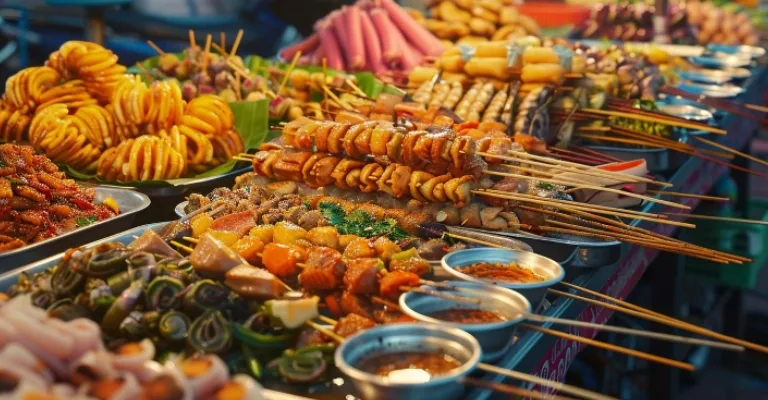
- Street food and local markets offer some of the best value-for-money meals in the country
- Local buses and songthaews (shared trucks) are significantly cheaper than taxis or private transport
- Guesthouses and family-run hotels often cost less than international hotel chains while offering more local character
- Traveling shoulder or low season can cut accommodation costs substantially compared to peak season
Money-Saving Tips
- Book accommodation and domestic flights during shoulder season (March-May or September-October) for lower rates
- Eat where locals eat. Street food stalls and local markets are cheaper and often better than tourist-area restaurants
- Use overnight trains or buses for longer distances to save both a night of accommodation and transport costs
- Negotiate politely at markets, but always confirm metered taxi fares or use a ride-hailing app to avoid overcharging
- Travel with a refillable water bottle and use filtered water stations, common in hostels and cafes, to cut down on plastic bottle costs
A Note on Currency and Payments
Thailand uses the Thai Baht (THB). Cash is still widely used, especially for street food, markets, and smaller guesthouses, while cards and mobile payment apps are increasingly accepted in cities and larger establishments. It's worth carrying some cash at all times, particularly outside major tourist areas.
Frequently Asked Questions
Costs are broadly comparable across Southeast Asia, though Thailand's tourism infrastructure means prices can vary more widely by region and travel style than in some neighboring countries.
This depends heavily on travel style and region. Backpackers generally spend significantly less per day than mid-range or luxury travelers, and costs in Bangkok or Chiang Mai tend to run lower than in Phuket or Koh Samui.
Booking in advance is generally safer for guaranteeing availability and price, especially in peak season, though last-minute deals can sometimes be found in less busy periods.
RELATED GUIDES
Continue Your Journey

GUIDE
The Ultimate Thailand Travel Guide: Everything You Need to Plan Your Trip

ARTICLE
Best Time to Visit Thailand: Month-by-Month Weather & Festival Guide
ARTICLE
Thailand Visa Guide: Requirements, Types & How to Apply

ARTICLE
Bangkok vs Phuket vs Chiang Mai vs Koh Samui: Choosing Your Thailand Base

ARTICLE
Getting Around Thailand: Trains, Flights, Ferries & Local Transport Explained
Share this post

Thailand Travel Insights for B2B PartnersThailand Travel Insights for B2B Partners
Explore Thailand travel insights, destination guides, and trends for exceptional client travel experiences.Explore Thailand travel insights, destination guides, and trends to create exceptional client experiences.